Worker Health: One of the Most Underdiscussed Issues in Textile Manufacturing
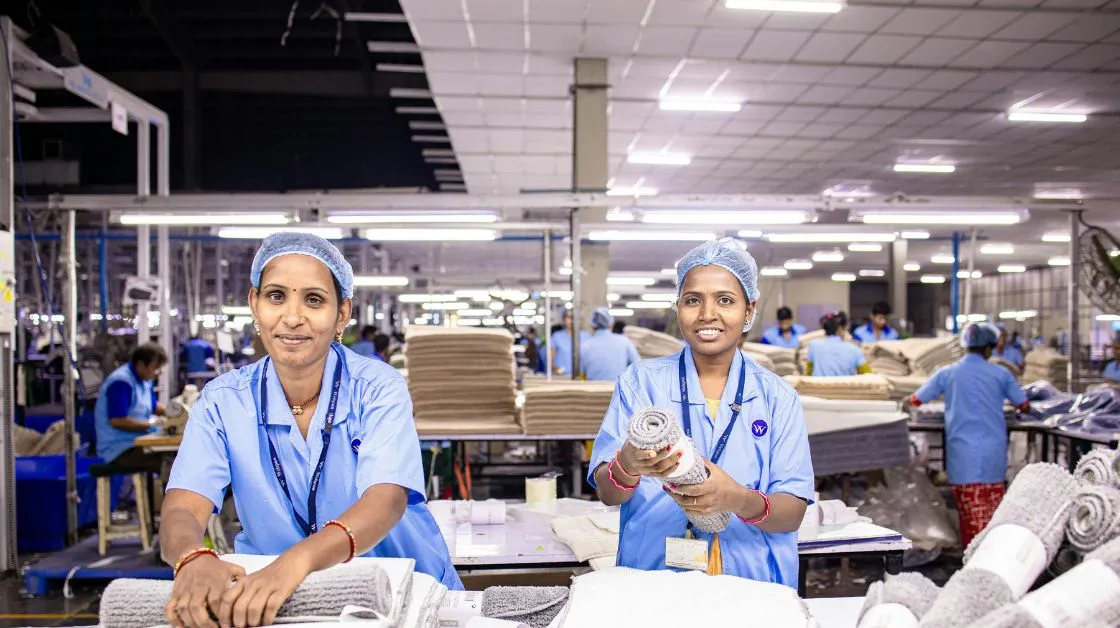
The issue most of the industry does not talk about
Sustainability conversations in the textile industry have advanced on environmental metrics: carbon, water, waste. Worker health and safety, when it comes up, usually refers to structural building safety or labor conditions such as wages and hours. Chemical exposure during production receives far less attention.
The International Labour Organization estimates that more than one billion workers globally are exposed to hazardous substances in their work environment, contributing to preventable cancers, chronic disease, and millions of work-related deaths every year. Textile dyeing, finishing, and coating sit squarely inside this global health picture. Workers in these areas may encounter reactive chemistries, volatile organic compounds from solvent-based processes, powder enzymes, and CMR-classified substances (carcinogenic, mutagenic, or toxic to reproduction).
Under national and international law, the legal duty to provide safe working conditions sits with the manufacturer running the facility. But responsibility does not stop there. Under human rights due diligence frameworks, including the UN Guiding Principles on Business and Human Rights and the OECD Guidelines for Multinational Enterprises, brands sourcing from these facilities are expected to identify, prevent, and mitigate health and safety risks in their supply chains, use their leverage to drive improvements, and contribute to remediation where harm occurs. Operational responsibility sits with the manufacturer. Brands remain responsible for how they address the impacts linked to their sourcing.
This matters because a risk that is never assessed cannot be prevented. End-product testing does not reveal what workers were exposed to during production.
What health and safety risks look like in practice
The bluesign System assesses occupational health and safety as one component of a facility-level evaluation that also covers chemical management, environmental performance, resource productivity, emergency preparedness, and social responsibility. On-site assessments look for the same categories of issue across regions and facility types:
- Inadequate ventilation. Production areas with high chemical exposure potential operating without proper air extraction or workplace atmosphere monitoring.
- Open chemical handling. Solvents, adhesives, and other hazardous materials stored or used in open containers, exposing workers to volatile compounds unnecessarily.
- Missing safety documentation. No formal hazard and risk assessments, no occupational health program, no systematic tracking of chemical exposure.
- Insufficient training. Workers handling hazardous materials without adequate instruction in safe handling, emergency response, or PPE use.
- Improper storage. Chemicals stored without secondary containment, proper labeling, or separation by hazard class, creating spill and cross-contamination risks.
These are common issues, not edge cases. Remediating them is straightforward when the facility has a functioning occupational health and safety management system in place; much harder when it does not.
The S.T.O.P. principle: a hierarchy of controls
Effective health and safety management follows a hierarchy of controls. The S.T.O.P. principle ranks four types of intervention from most to least effective:
- Replace hazardous substances with safer alternatives. This is the most effective control because it removes the hazard at the source. CMR solvents are one example: where feasible, water-based or less hazardous chemistries are substituted for solvents classified as carcinogenic, mutagenic, or toxic to reproduction.
- Technical controls. Install engineering solutions such as enclosed systems, local exhaust ventilation, and automated processes that reduce exposure without relying on worker behavior.
- Organizational measures. Implement training, standard operating procedures, and workplace practices that reduce exposure through consistent behavior.
- Personal protection. Provide personal protective equipment (PPE) as a final layer of defense when other controls are not sufficient.
The principle is sequential: substitution comes first, PPE comes last. PPE works only when the equipment is suitable for the task, available in the right size, comfortable enough to be worn consistently, and supported by training and supervision. Where any of those break down, PPE alone cannot carry the load. That is why a system-based approach evaluates and applies the full hierarchy rather than defaulting to the last line of defense.
What better practice looks like
Some of the controls below are legal requirements under national health and safety law. Others go beyond the legal minimum into what well-managed facilities do as a matter of course. The line between the two depends on jurisdiction. In all cases, system-based assessment looks for evidence that the controls are in place and working, not just documented:
- Substitution programs. Moving from CMR solvent-based coatings and laminations to water-based alternatives where feasible, backed by the bluesign CMR solvent management and phaseout concept.
- Local exhaust ventilation. Source-capture extraction at dosing stations, coating heads, and finishing lines that removes chemical vapor before it reaches the worker breathing zone.
- Enclosed handling and dosing. Closed-loop liquid chemical transfer systems and enclosed dosing equipment that reduce open contact with solvents, dyes, and finishing chemicals during routine production.
- Suitable PPE, available when needed. PPE selected for the actual hazard, sized for the worker, maintained, and replaced. Backed by training so workers know when and how to use it.
- OHS management systems. Documented hazard and risk assessments, measurable OHS objectives, periodic workplace atmosphere monitoring, and onboarding plus refresher training for workers handling hazardous materials.
These controls exist today in many textile finishing facilities. The challenge is consistency across supply chains.
Why this matters: workers, then law, then sourcing
The first reason this matters is straightforward. Workers can be harmed. They can lose their lives, their long-term health, or their ability to keep working. A safe and healthy working environment is a fundamental principle and right at work, recognized by the International Labour Organization in 2022 alongside the long-standing principles on freedom of association, forced labour, child labour, and discrimination. Protecting workers from chemical harm is part of why the bluesign Criteria were developed.
The second reason is legal. National occupational health and safety law in textile-producing countries sets minimum requirements for hazard assessment, exposure limits, training, PPE, and incident reporting. ILO Convention 155 (Occupational Safety and Health) and Convention 187 (Promotional Framework) are designated as fundamental Conventions. Compliance with national OHS law is the floor, not the ceiling.
The third reason concerns sourcing. Human rights due diligence obligations are increasingly written into law. The German Supply Chain Due Diligence Act (LkSG) and France’s Duty of Vigilance law are already in force. The EU Corporate Sustainability Due Diligence Directive (CSDDD) was adopted in 2024 and amended through Omnibus I in February 2026. Under the amended timeline, EU Member States must transpose the CSDDD into national law by 26 July 2028, and obligations apply from 26 July 2029. Scope thresholds were narrowed under Omnibus I, so companies should consult their own legal counsel on whether and when they are in scope.
In practical terms: brands that source through system-based assessment can see how the facilities producing their goods manage chemical exposure, what controls are in place, and where the gaps are. That is verified primary data on chemical management, exposure controls, and safety practices, rather than self-reported questionnaires. It gives brands something to act on, which is what due diligence asks of them.
Worker, community, consumer, and environment are one system
Worker health does not exist in isolation. The same chemicals that create occupational risk during production can also create environmental risk for surrounding communities through air emissions and wastewater discharge, and, if poorly managed, can affect the safety of the finished product. A comprehensive approach to chemical management in textiles addresses worker safety, community safety, consumer safety, and environmental protection within a single system, starting at chemical selection and continuing through to the finished article.
Learn more
bluesign evaluates health and safety as part of comprehensive, facility-level assessment alongside chemical management, environmental performance, and resource use. To see how the bluesign System addresses worker health risk in practice, read the bluesign CMR Solvent Phaseout Program overview, or visit the Brands and Retailers page to learn how system-based assessment supports responsible sourcing.
FAQ
What are the main worker health risks in textile manufacturing?
Workers in dyeing, finishing, and coating facilities can be exposed to volatile organic compounds, reactive chemistries, CMR-classified substances (carcinogenic, mutagenic, or toxic to reproduction), and powder enzymes. Inadequate ventilation, missing safety protocols, and improper chemical storage increase these risks. National occupational health and safety law sets minimum requirements; well-managed facilities go further.
What is the S.T.O.P. principle?
S.T.O.P. is a hierarchy of health and safety controls: Substitution, Technical controls, Organizational measures, and Personal protection. The most effective approach starts with removing the hazard (substitution) and uses PPE only when other controls are not sufficient.
Who is responsible for worker health in a textile supply chain?
The legal duty to provide safe working conditions sits with the manufacturer operating the facility. Under human rights due diligence frameworks, brands sourcing from those facilities are also expected to identify, prevent, and mitigate risks in their supply chains and contribute to remediation where harm occurs.
How does bluesign assess worker health at manufacturing facilities?
bluesign assessors evaluate occupational health and safety on-site as part of a wider facility assessment that covers chemical management, environment, resource productivity, emergency preparedness, and social responsibility. Assessment results feed into improvement plans developed with each facility.

Written by Mr. Geoffrey McKenzie
Global Marketing ManagerGlobal Marketing Manager at bluesign, writing on textile chemistry, regulation, and sustainability.

Reviewed by Dr. Daniel Waterkamp
Head of bluesign AcademyPh.D. Process EngineeringThis article was reviewed by Daniel Waterkamp, a chemical engineer and sustainability professional with a PhD in process engineering. As Head of bluesign Academy, Daniel oversees chemical compliance for international brands and helps develop safer, sustainable solutions for the textile industry. His expertise ensures the accuracy and relevance of the information presented.
You might be interested in the following articles

How Process Chemistry Influences Scope 3 Emissions in Textile Manufacturing
Most fashion brands' carbon footprint sits in their supply chain. Learn why process chemistry, not accounting alone, is the lever for reducing Scope 3 emissions.
Read more
The Fashion Industry’s Shift to PFAS-Free Clothing
PFAS bans in textiles are now in effect across the U.S. and Europe. See the full 2026 regulatory map, health risks, PFAS-free alternatives, and how bluesign supports compliance.
Read more
What It Really Takes to Make a Responsible Jacket
A ski jacket requires dozens of components from multiple suppliers. Ridestore and bluesign show what responsible production looks like across the entire value chain.
Read more