Managing Hazardous Solvents Across Textile Supply Chains: From Risk to Readiness
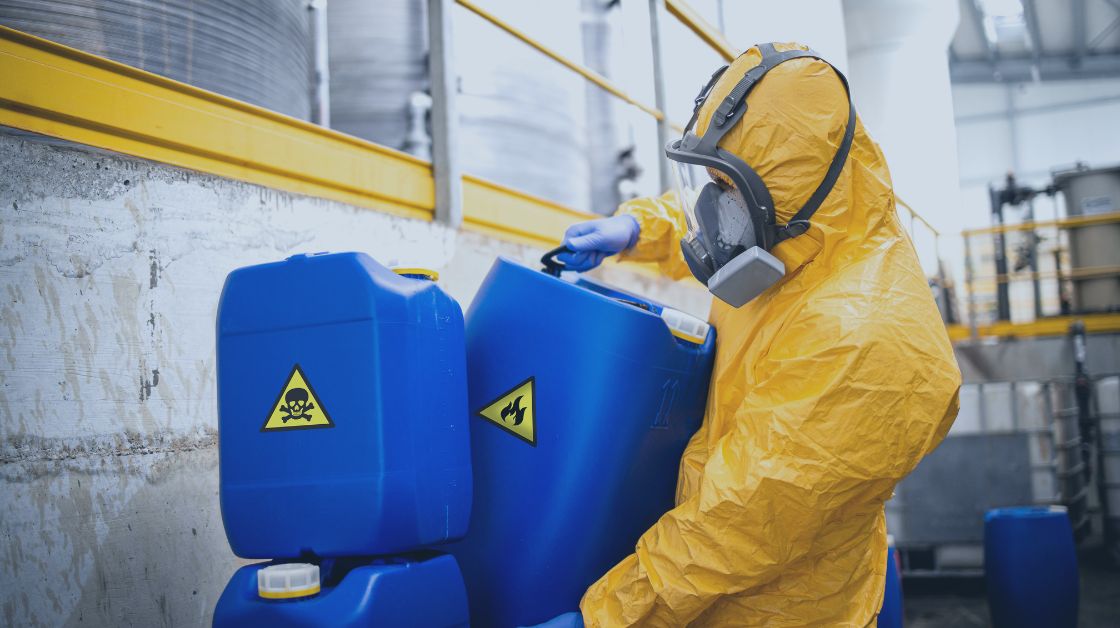
Yet most brands still rely on restricted substance lists and end-product testing to manage chemical risk. Both tools focus on what remains in the finished product. Neither captures what happens during production. Solvents evaporate on the factory floor, exposing workers to hazardous vapors and releasing VOC emissions into the air, all before the product reaches a testing lab. This is a structural blind spot, and time is running short to close it.
What Are CMR Solvents, and Why Should Brands Care?
Solvents dissolve other materials to create liquid formulations. In textiles, they are used across coating, lamination, printing, finishing, and cleaning. Many are volatile organic compounds (VOCs) that evaporate readily into the air. The most hazardous carry CMR classification: carcinogenic, mutagenic, or toxic to reproduction. Under the EU’s CLP Regulation (EC No 1272/2008) and the Globally Harmonized System (GHS), CMR substances are categorized by the strength of evidence:
- Category 1A/1B: Known or presumed effects in humans, based on human or strong animal evidence.
- Category 2: Suspected effects, based on limited evidence.
The solvents most commonly used in textile processing, including DMF, N,N-dimethylacetamide (DMAc), N-methylpyrrolidone (NMP), toluene, and xylene, fall into these categories. DMF, classified as toxic to reproduction (Category 1B) under the EU REACH Regulation, is already subject to specific restrictions on its use in textile coating and fiber spinning.
If your supply chain includes PU coatings, synthetic leather, membrane manufacturing, or solvent-based printing, these substances are likely in active use right now.
Where Solvent Risk Hides
Solvent-intensive processes happen at Tier 2 and Tier 3: coating facilities, lamination plants, membrane manufacturers, and chemical mixing operations. These are the suppliers most brands have the least visibility into.
Because solvents evaporate during production, they leave little or no trace in the finished product. A fabric can pass every end-product test while having been produced using thousands of litres of hazardous solvents. Workers were exposed. VOC emissions were released. But the downstream test catches none of it. This is not a theoretical risk. It is a structural blind spot in how most supply chains are managed today.
Regulation Is Accelerating
The regulatory trajectory across jurisdictions is clear: stricter controls on hazardous solvents, with increasing focus on worker exposure and process-level accountability.
Europe
The EU has already acted. DMF was restricted under REACH Annex XVII with binding phase-out dates: use in direct coating and transfer processes for PU textile coating was restricted in December 2024, and use in dry and wet spinning of synthetic fibers followed in December 2025. The European Commission is now drafting restrictions on 22 newly classified CMR substances under REACH Annex XVII, with formal adoption expected in late 2026.
Chemical transparency, process-level controls, and accountability for worker exposure are no longer aspirational in the EU. They are becoming baseline requirements.
North America
In the United States, the EPA completed its risk evaluation for NMP under the Toxic Substances Control Act (TSCA) and proposed risk management measures including a Workplace Chemical Protection Program focused on dermal and inhalation exposure. However, the final rule has not been issued. The rulemaking process has stalled as the agency re-evaluates safety requirements and alignment with other workplace regulations. A revised timeline has not been announced.
Canada’s CEPA framework is moving in a similar direction, with recent assessments of both NMP and NEP.
Brands sourcing globally cannot afford to track only one jurisdiction. The direction is converging, even where timelines remain uncertain.
Why Current Approaches Fall Short
Most brands rely on restricted substance lists (RSLs), end-product testing, and periodic audits. Each serves a purpose, but none was designed to manage the risks that solvents create during production.
RSLs and end-product testing focus on what remains in the finished article. They do not cover process chemicals that evaporate during manufacturing. A manufacturer may use thousands of litres of DMF in its coating operations while producing articles that pass every RSL test. The product is compliant. The production process may not be. Workers bear the health risk. The brand bears the regulatory and reputational exposure.
Audits provide a snapshot, but chemical risks change with formulations, suppliers, and seasons. Without continuous monitoring, risks re-emerge between assessment cycles.
What Effective Solvent Management Requires
Closing this gap requires moving from product-level checks to system-level management, addressing chemical risk across the full production process.
Substitution first
The most effective way to reduce solvent risk is to stop using hazardous solvents. Water-based PU coatings and pigment formulations are the highest-impact substitution path for most textile applications. High-solid and solvent-free systems are increasingly viable for coatings and finishing. Where full substitution is not yet technically feasible, lower-hazard alternatives can reduce risk, provided they are properly evaluated to avoid regrettable substitution.
Engineering controls and worker protection where substitution is not yet possible
The reality is that many factories across global supply chains still use CMR solvents in their production processes. Where hazardous solvents remain in use, engineering controls and worker protection measures are critical. These are not optional improvements. They are the frontline of risk reduction for the workers handling these substances every day.
Off-gas treatment systems such as regenerative thermal oxidizers (RTOs) and activated carbon filters capture solvent vapors before they are released into the atmosphere. Without these controls, volatile solvents evaporate directly into indoor and outdoor air, affecting both worker health and local air quality. Solvent recovery systems can also reclaim and reuse solvents, reducing both emissions and material costs.
Equally important are the physical controls that reduce worker exposure on the production floor. This includes enclosing solvent-intensive machinery and application systems so vapors are contained at the source, installing extraction curtains and local exhaust ventilation at points of emission, eliminating open application systems where solvents are exposed to the ambient environment, and providing appropriate personal protective equipment (PPE) where engineering controls alone are not sufficient.
These measures need to be paired with ongoing VOC monitoring and solvent mass balance tracking so that facilities can identify where emissions occur and whether controls are performing as intended.
Verified data, not just declarations
Self-declared compliance is a starting point, not an endpoint. Effective solvent management requires verified primary data from the production floor: solvent inputs, consumption, emissions, and abatement efficiency tracked over time. The bluesign System takes this approach. bluesign Criteria require that when CMR solvents are used at a production site, the off-gas abatement system must achieve an efficiency of at least 95% for the relevant CMR solvent(s), or maintain a total organic carbon (TOC) concentration in the off-gas of less than 10 mg/m³. The bluesign CMR Solvent Concept, introduced in 2021, provides binding timelines for substitution and management across textile manufacturing, membrane production, footwear, and accessory production.
Six Things Brands Should Do Now
You do not need to become a chemical expert. But you do need to start asking better questions and setting clearer expectations.
- Map your solvent exposure. Identify which Tier 2 and Tier 3 suppliers use solvent-intensive processes: PU coating, lamination, membrane manufacturing, cleaning, and printing. If you do not know where solvents are being used in your supply chain, you cannot manage the risk.
- Push for substitution. Work with suppliers and chemical partners to evaluate water-based and low-VOC alternatives for the highest-risk applications first. Many viable alternatives already exist.
- Require emission controls. Where substitution is not yet feasible, ask suppliers about off-gas treatment systems, solvent recovery, and VOC monitoring. If a supplier cannot describe how it captures and treats solvent emissions, that is a red flag.
- Require worker protection controls. Ask suppliers how they protect workers from solvent exposure. Enclosed machinery, extraction ventilation, elimination of open application systems, and appropriate PPE are baseline expectations. If a facility cannot demonstrate these controls, the risk to workers is unmanaged.
- Demand verified data. Supplier self-declarations are common but insufficient. The regulatory and market expectation is moving toward verified primary data, confirmed by independent assessors. Brands that rely solely on supplier questionnaires will find that gap harder to defend.
- Adopt a system-based approach. Chemical risk management is not a one-time exercise. It requires continuous monitoring, regular assessment, and structured improvement. System-based approaches provide the infrastructure that connects chemical inputs to manufacturing practices to brand-level accountability.
The Readiness Gap Is Already Widening
There is a growing divide in the textile industry. On one side: companies that identify hazards early, invest in substitution, and build systems for ongoing chemical management. On the other: companies waiting for each substance to be formally restricted before acting.
The second group is already behind. DMF restrictions are in force. NMP regulation is advancing in the US and Canada. The EU is preparing to restrict 22 additional CMR substances under REACH. The pace is accelerating.
Brands that treat solvent management as someone else’s problem will eventually find it on their doorstep: as a regulatory compliance issue, a supply chain disruption, or a reputational risk they cannot explain away.
The textile industry does not need more lists. It needs systems that connect what goes into production with what brands can credibly claim. That is what readiness looks like. To learn how the bluesign System supports hazardous solvent management across textile supply chains, contact us today.
FAQ
Q: What are CMR solvents in textile manufacturing?
A: CMR solvents are substances classified as carcinogenic, mutagenic, or toxic to reproduction. In textiles, common examples include DMF, DMAc, NMP, toluene, and xylene. They are used in coating, lamination, printing, and cleaning processes.
Q: Why are restricted substance lists not enough to manage solvent risk?
A: RSLs focus on substances in the finished product. CMR solvents evaporate during manufacturing, so they often leave no detectable traces in the final article. The risk to workers and the environment occurs during production, not in the product itself.
Q: What is the EU doing about hazardous solvents in textiles?
A: The EU has restricted DMF under REACH Annex XVII, with phase-out dates for specific textile applications in 2024 and 2025. The European Commission is drafting restrictions on 22 additional newly classified CMR substances, with formal adoption expected in late 2026. Regulatory expectations for chemical transparency and worker exposure controls continue to increase.
Q: How can brands manage solvent risk in their supply chains?
A: Brands should map solvent-intensive processes across Tier 2 and 3 suppliers, prioritize substitution with water-based or low-VOC alternatives, require both emission controls and worker protection measures where substitution is not feasible, and adopt system-based approaches that verify primary data from production facilities.

Reviewed by Sumit Kanti Sarker
Sustainable Textile ExpertMaster’s degree in Chemical and EnergyRead full profile →You might be interested in the following articles

2026 Revision of the bluesign Chemical Reference Lists: BSSL, BSBL, and RSL
The 2026 bluesign BSSL, BSBL, and RSL are in force from 1 July 2026, with stricter PFAS limits and new substance restrictions. See what changed and download them.
Read more
Sweden proposes national PFAS restriction in selected consumer products
Sweden has proposed a national PFAS restriction on clothing, footwear, cosmetics and more. What it covers, the limit values, exemptions and key dates.
Read more
The Fashion Industry’s Shift to PFAS-Free Clothing
PFAS bans in textiles are now in effect across the U.S. and Europe. See the full 2026 regulatory map, health risks, PFAS-free alternatives, and how bluesign supports compliance.
Read more